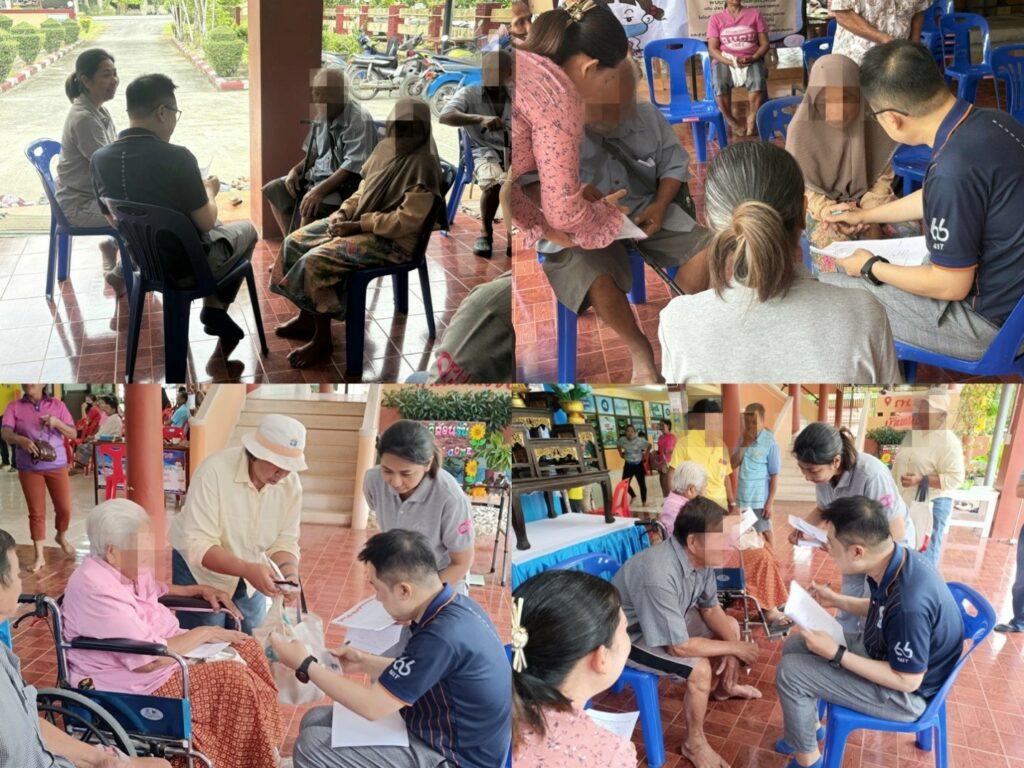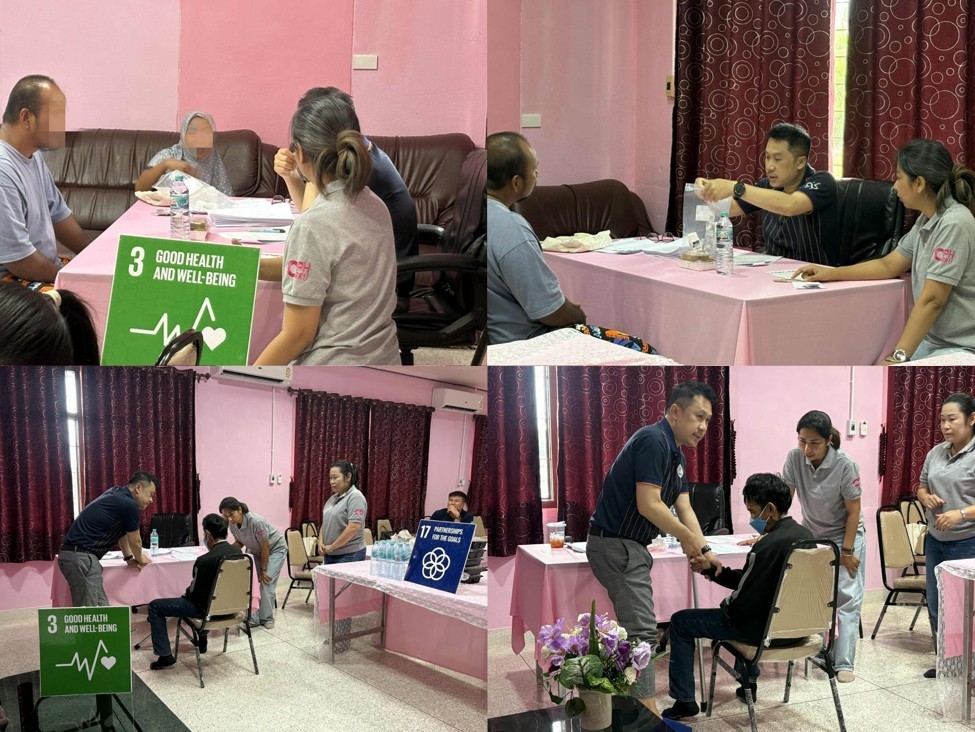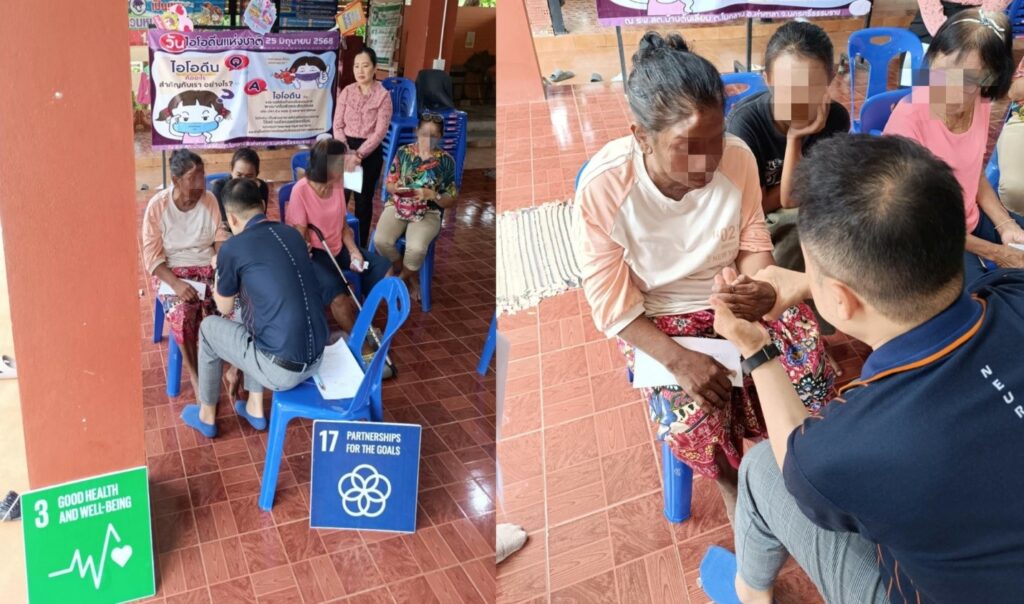
On August 14, 2025, the Medical Technology Program and the Academic Service and Social Engagement Project, School of Allied Health Sciences, Walailak University, organized a community health service activity at Ban Ton Liab Health Promoting Hospital.
The project was led by Asst. Prof. Dr. Nantawan Wangmuang and Asst. Prof. Dr. Duangjai Piukham, in collaboration with Dr. Tinnakorn Yadee, neurologist from the Neurological Institute of Thailand, as well as faculty members from Chiang Rai Rajabhat University and Loei Rajabhat University.
The team provided neurological and epilepsy screening, diagnosis, and consultation services, along with guidance on patient care and rehabilitation, under the project titled
“Epilepsy Screening and Diagnosis in Model Communities to Improve Quality of Life within Ban Ton Liab Health Promoting Hospital Service Area.”
This activity is part of a national study to assess the prevalence of epilepsy and related risk factors in Thailand, conducted across all regions.
For the southern region, Ban Ton Liab Health Promoting Hospital was selected as the representative area, where over 2,000 residents were screened in collaboration with local healthcare officers and village health volunteers (VHVs).
Findings revealed that 71 individuals (3.55%) were identified as at-risk, including elderly people, students, bedridden patients, and migrant workers.
Among these, 3 individuals (0.15%) were diagnosed with active epilepsy — a prevalence comparable to the northeastern region, while the northern region showed the highest rate (0.2%).
Common triggering factors included lack of sleep, stress, alcohol consumption, and drug use.
Neurologists also provided education on first aid and preventive care for epilepsy patients, such as:
Ensuring a clear, safe space during seizures to prevent injury.
Avoiding insertion of objects into the patient’s mouth.
Placing the patient in a recovery (side-lying) position to prevent choking.
It was emphasized that epilepsy can be managed and even cured through proper medication adherence and avoidance of risk factors.
The Academic Service and Social Engagement Group of the Medical Technology Program aims to promote good health and well-being (SDG 3.3.2) and inclusive, equitable health education (SDG 4) within local communities.
By empowering patients, caregivers, and community members with knowledge and practical care skills, the project hopes to serve as a model for sustainable health promotion and interdisciplinary collaboration, paving the way for expansion to other regions in the future.